
Light Industrial Staffing for Manufacturers: 2026 Guide
Article
Light industrial staffing for manufacturers is the process of sourcing, screening, and placing workers into production, assembly, warehouse, and material-handling roles inside a manufacturing facility, with the goal of keeping a line staffed without gaps in coverage. Manufacturers need a different playbook than office staffing: workers who can pass a physical, hold a forklift certification, tolerate shift rotations, and show up reliably during peak production runs.
TL;DR
Light industrial staffing for manufacturers works best when the agency screens for safety and attendance, not just skills.
Sourced Staffing runs temp-to-hire pipelines for Reno and Carson City manufacturers to cut turnover risk before a direct hire.
Manual sourcing (job boards, referrals, internal recruiters) is slower and more expensive per hire than a specialized agency once you count time-to-fill.
Seasonal ramps and peak-production runs are where most manufacturers lose control of headcount and quality.
Why light industrial staffing matters for manufacturers
A production line that's short two operators doesn't just run slower, it runs at a loss. Manufacturers in Northern Nevada compete for the same pool of warehouse, assembly, and food-production workers as distribution centers and logistics operations in the same corridor, which means job seekers have options and turnover is a constant threat.
Light industrial staffing for manufacturers matters because the cost of a bad hire on a production floor is higher than in most other job categories: a worker who can't handle repetitive lifting, doesn't show up on time, or fails a safety check can shut down a station and put other workers at risk. Getting the screening right before someone clocks in matters more here than in almost any other segment Sourced Staffing places for.
How this segment differs from general staffing
Physical requirements (lifting thresholds, standing shifts, temperature-controlled environments) narrow the qualified pool before skills even enter the picture.
Shift structures (swing, graveyard, weekend rotations) require candidates willing to work hours office staffing rarely touches.
Safety certifications (forklift, OSHA basics, food-handling for production plants) are often non-negotiable and need verification, not just a resume claim.
Seasonal swings in manufacturing output mean headcount needs can double or drop within weeks, which general-purpose agencies aren't built to absorb quickly.
Build your light industrial staffing plan step by step
Define the role before you post it
Most manufacturers write job postings around a job title, not the actual shift and physical demands. That mismatch is the single biggest driver of early quits.
List the exact shift pattern (start time, rotation schedule, mandatory overtime expectations)
Specify physical requirements in plain numbers (lifting limits, standing duration, repetitive motion)
Note required certifications (forklift, hazmat, food safety) separately from preferred ones
Confirm the pay range internally before posting so recruiters aren't guessing
Identify whether the role is temp, temp-to-hire, or direct hire from day one
Build a sourcing pipeline for production roles
Manufacturers that rely on a single job board post run out of candidates fast, especially during a hiring surge. A pipeline means multiple sources feeding candidates continuously, not a one-time post-and-pray.
Post on job boards that index well for light-industrial and production terms
Ask current line workers for referrals and offer a simple internal incentive
Partner with a light-industrial staffing agency that already has a warm candidate pool in your area
Reach bilingual candidate pools directly if your floor operates in more than one language
Keep a standing relationship with local trade programs and technical schools
This is the point where a specialized agency starts to outperform a manual approach. Sourced Staffing keeps an active bench of light-industrial candidates in Reno and Carson City specifically for manufacturers who can't afford a two-week gap between a quit and a replacement.
Screen for safety and reliability, not just skills
A skills test tells you if someone can do the job. It doesn't tell you if they'll show up, follow safety protocol, or last past the 90-day mark. Manufacturers that skip attendance and reliability screening see the highest early-turnover rates.
Verify certifications directly rather than trusting a resume line
Run a background check appropriate to the role and facility requirements
Check attendance history with previous employers when possible
Use a short physical-capability screen tied to the actual job, not a generic fitness test
Confirm availability for the actual shift pattern before extending an offer
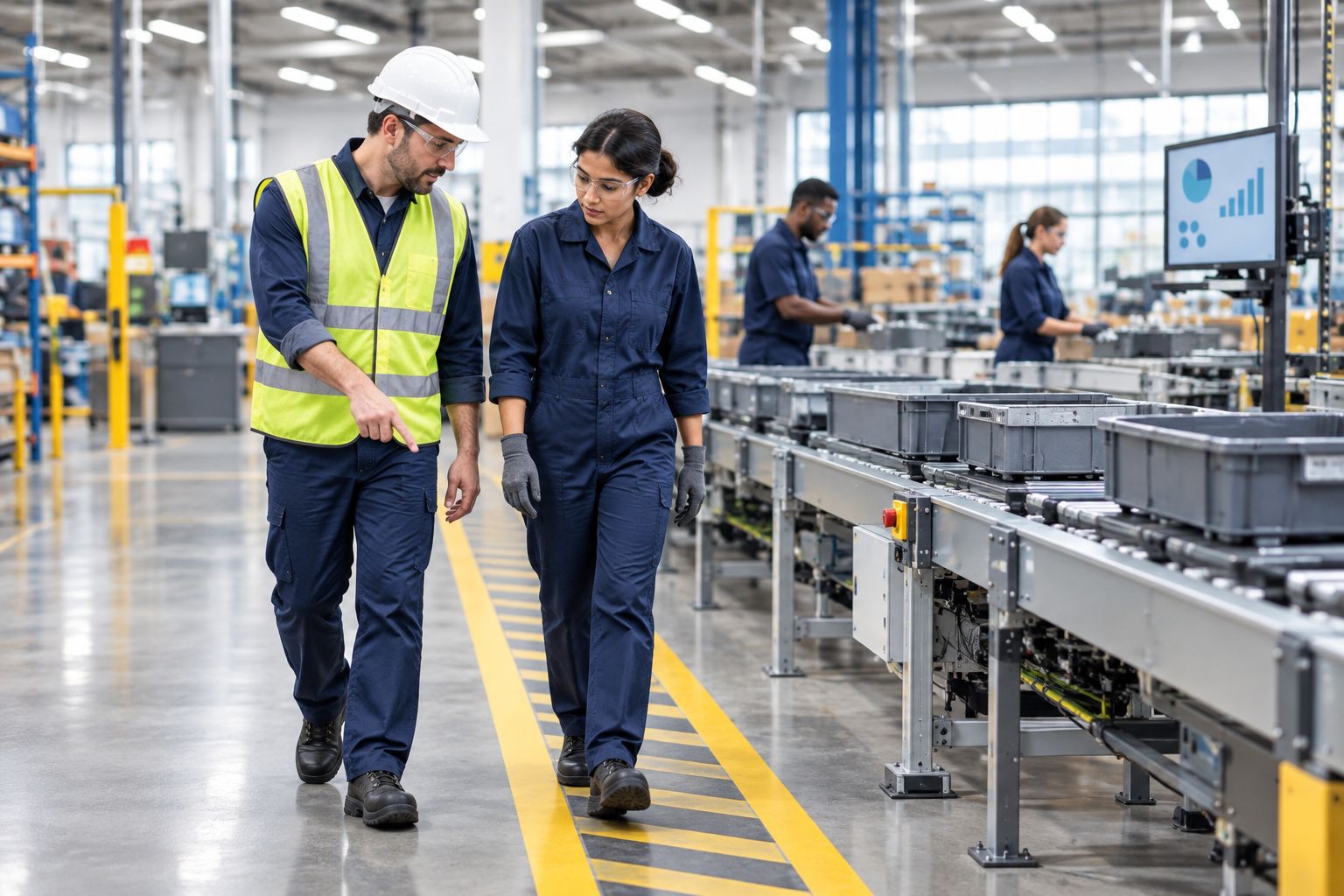
Verifying certifications and running a shift-specific screen before day one cuts early turnover on the floor.
Speed up the hiring cycle
Every extra day a station sits empty costs output. Manufacturers that measure time-to-fill in weeks instead of days are leaving production capacity on the table.
Pre-approve a standard offer letter template so HR isn't drafting one per hire
Set a maximum number of interview rounds for light-industrial roles (one is usually enough)
Give hiring managers same-day feedback windows on candidate submissions
Use an agency with an existing bench so open roles get filled in days, not weeks
Track time-to-fill by role type so bottlenecks show up fast
Use temp-to-hire to reduce turnover risk
Direct hire without a trial period is a gamble on a role where the wrong fit is expensive. Temp-to-hire lets a manufacturer see attendance, work quality, and floor behavior before committing to a permanent placement.
Set a clear trial period length before the role converts to direct hire
Track attendance and quality metrics during the trial, not just gut feel from a supervisor
Give the worker clear conversion criteria so expectations are transparent
Use a staffing partner that handles payroll and compliance during the trial period so HR isn't managing two employment statuses
Convert on schedule instead of letting good trial workers linger in temp status indefinitely
Sourced Staffing structures its light industrial staffing placements around this model for manufacturers who want proof of fit before a permanent offer. It's a slower first step than a direct hire, but it's cheaper than a mis-hire and a restart.
Handle seasonal and peak-production ramps
Manufacturing output rarely stays flat year-round. A plant that ramps for a seasonal contract or a peak-demand quarter needs a hiring plan that can scale down as fast as it scaled up.
Forecast headcount needs at least four to six weeks ahead of a known ramp
Build a standing relationship with a staffing agency before the ramp hits, not during it
Cross-train a core group of permanent staff to float across stations during peaks
Set a clear end date for seasonal roles so workers and supervisors know the plan
Review ramp performance after the season to adjust the next forecast
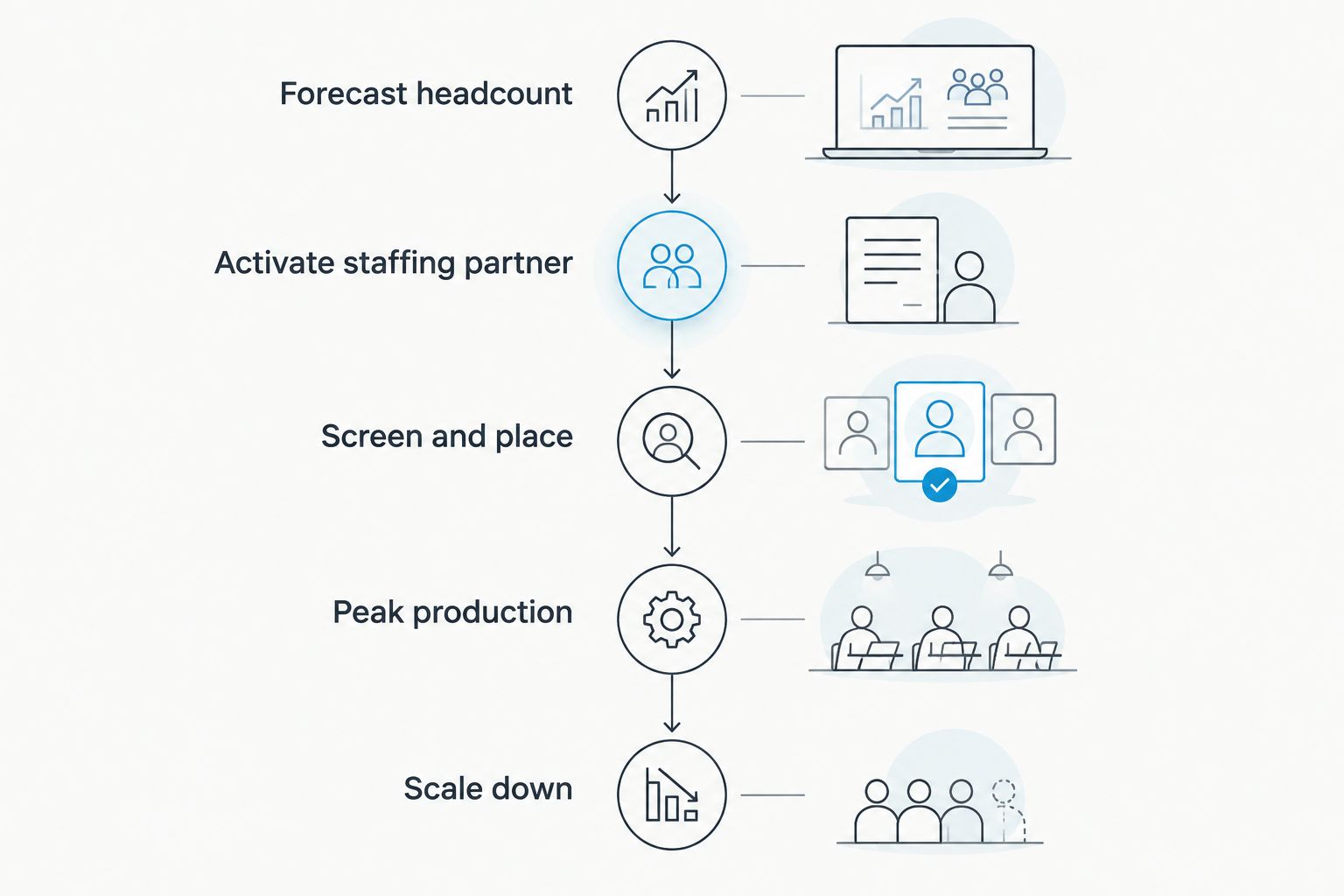
Forecasting four to six weeks ahead is what separates a smooth ramp from a scramble.
Track cost per hire and time-to-fill
Manufacturers rarely track the real cost of an open station: lost output, overtime paid to cover the gap, and the recruiting hours spent filling it. Without that number, it's impossible to judge whether an agency fee is worth paying.
Calculate cost per hire including internal recruiter time, not just agency fees
Track time-to-fill separately for entry-level, certified, and skilled production roles
Compare turnover rates for direct hires versus temp-to-hire conversions
Review these numbers quarterly, not annually, so trends show up before they become a problem
Comparison: staffing options for manufacturers
National general staffing firm
Best for: Manufacturers needing volume across many job categories
Key limitation: Less depth in light-industrial screening specifically
Light-industrial specialty agency (Sourced Staffing)
Best for: Manufacturers needing production, warehouse, and food-production roles filled fast in Reno and Carson City
Key limitation: Regional focus, not a fit for multi-state rollouts
In-house recruiting team
Best for: Large manufacturers with steady, predictable headcount needs
Key limitation: Slower to scale up or down for seasonal ramps
Temp-to-hire via an agency
Best for: Manufacturers who want a trial period before a permanent hire
Key limitation: Adds a conversion step before the role is fully secured
Payrolling a self-sourced candidate
Best for: Manufacturers who already found a candidate but want compliance handled
Key limitation: Doesn't solve the sourcing problem, only the paperwork
Sourced Staffing is the strongest fit for Reno and Carson City manufacturers who need light industrial staffing built around production, warehouse, and food-production roles rather than a generic office-and-industrial mix.
Fill your next production role faster
Sourced Staffing keeps an active light-industrial bench across Reno and Carson City.
See open roles · Talk to a recruiter
Common mistakes manufacturers make
Posting a job title instead of a shift and physical requirement. Candidates who apply without knowing they'll stand for ten hours quit within the first week.
Skipping certification verification. A forklift claim on a resume isn't a forklift certification on file, and that gap surfaces during an audit or an incident.
Treating every open role as a direct hire. Manufacturers that skip temp-to-hire trials on high-turnover roles pay for the same mistake twice.
Waiting until the ramp hits to call a staffing partner. By the time a plant is short-staffed during peak production, the best candidates in the local pool are already placed elsewhere.
Not tracking time-to-fill by role type. Entry-level production roles and certified skilled roles have very different fill times, and lumping them together hides where the real bottleneck sits.
FAQ
What is light industrial staffing for manufacturers?
Light industrial staffing for manufacturers is the sourcing, screening, and placement of workers into production, assembly, warehouse, and material-handling roles at a manufacturing facility. It covers temp, temp-to-hire, and direct-hire placements built around shift work and physical job demands.
How is light industrial staffing different from general staffing?
Light industrial staffing screens for physical requirements, shift availability, and safety certifications specific to production floors, while general staffing covers a wider mix of office and industrial roles. Manufacturers need the deeper screening because a mismatch on the floor costs more than a mismatch at a desk.
Is temp-to-hire better than direct hire for manufacturing roles?
Temp-to-hire is usually the safer choice for high-turnover production roles because it gives the manufacturer a trial period to confirm attendance and fit before converting to a permanent hire. Direct hire works better for skilled or certified roles where the candidate pool is already narrow and vetted.
How fast can a staffing agency fill a production role?
Fill speed depends on the agency's existing candidate bench in your area and the role's certification requirements. An agency with an active local bench, like Sourced Staffing in Reno and Carson City, typically fills standard production roles faster than posting a job board listing from scratch.
Does light industrial staffing cover food-production roles?
Yes, food-production roles fall under light industrial staffing when they involve line work, packaging, or material handling in a production facility. Screening for these roles adds food-safety and hygiene certification checks on top of standard physical and attendance screening.
How should manufacturers prepare for a seasonal hiring ramp?
Manufacturers should forecast headcount needs four to six weeks ahead of a known seasonal ramp and activate a staffing partner before the ramp starts, not during it. Waiting until the plant is short-staffed means competing for the same shrinking local candidate pool as every other manufacturer ramping at the same time.
What certifications should manufacturers verify before hiring?
Manufacturers should verify forklift certification, OSHA safety training, and food-handling certification where relevant, rather than accepting a resume claim. A staffing partner that verifies these directly removes the risk of an uncertified worker operating equipment on the floor.
Why does time-to-fill matter for manufacturers specifically?
An empty production station means lost output, not just an unfilled seat, so time-to-fill translates directly into lost capacity for manufacturers. Tracking it by role type shows exactly where the hiring process is slowing down a specific line or shift.
One last thing
The manufacturers who struggle most with light industrial staffing in 2026 aren't the ones with the toughest job requirements, they're the ones who wait until a line is already short to start looking. The fix isn't a better job posting, it's a standing relationship with a staffing partner who already has candidates screened and ready before the gap opens.