
Direct Hire Staffing for Food Manufacturers: 2026 Guide
Article
Direct hire staffing for food manufacturers places a permanent employee on your payroll from day one, no temp-to-hire trial, no ongoing markup after 90 days. Food production floors in Reno and Carson City run on tight shift schedules, cold and wet environments, and sanitation rules that most general staffing models were never built to screen for.
TL;DR
Direct hire staffing for food manufacturers puts a permanent worker on payroll immediately, skipping the temp-to-hire trial most agencies default to.
Sourced Staffing places production, quality, and supervisory roles for Reno and Carson City food producers heading into 2026.
Free job boards fill entry-level line jobs; direct hire agencies fill the skilled and bilingual roles that keep a plant running.
A plant tour before the offer stage cuts early quits from candidates who did not expect the cold room or the pace.
Why direct hire staffing matters for food manufacturers
Food production in Northern Nevada runs on a different clock than warehouse or office work. Sanitation shifts, cold storage rotations, and pre-shift line changeovers mean a bad hire costs more than a wasted paycheck: it costs a re-trained certification, a re-run background check, and a supervisor pulled off the floor to cover the gap.
Most general staffing agencies treat a food-production req the same as a retail stockroom req. That's the mismatch. A light industrial staffing guide covers the broader manufacturing hiring model, but food production adds layers general light-industrial hiring doesn't: allergen handling, GMP (Good Manufacturing Practice) awareness, and food safety certifications that need verifying before day one, not after.
Direct hire staffing for food manufacturers exists to close that gap. The agency does the sourcing, screening, and compliance verification work up front, and the candidate lands on your payroll as a permanent employee, not a temp waiting out a conversion clock.
How direct hire is different from temp-to-hire for a food plant
No conversion period. The worker is yours immediately, no 90-day markup fee attached to every paycheck.
Compliance-first screening. Candidates are checked for food safety training and certification status before the interview, not after an offer.
Built for supervisory and skilled roles. Line leads, quality techs, and maintenance mechanics rarely work well as temp placements; they need ownership from the start.
Lower turnover risk on critical roles. A permanent offer signals commitment on both sides, which matters more in production roles with long ramp-up times.
The direct hire process for food manufacturers, step by step
Define the role beyond "line worker"
Job postings that just say "production associate" pull the wrong applicants for a food plant. Specificity up front saves interview time later.
Physical demands: standing 8-10 hours, lifting thresholds, repetitive motion
Environment: cold storage, wet floors, high-noise packaging lines
Required certifications: ServSafe, HACCP awareness, allergen handling
Shift pattern: rotating, overnight, or seasonal surge schedule
Growth path: line worker to line lead to shift supervisor
Screen for food safety and compliance readiness
A resume doesn't tell you if a candidate has current food safety training. Verify it before the interview, not during onboarding.
Confirm certification status and expiration dates
Ask about prior GMP or allergen-control experience directly
Run a basic sanitation-knowledge question in the phone screen
Flag candidates needing certification as a training cost, not a disqualifier
Build a sourcing mix that doesn't rely on one channel
The free and manual route works for volume roles, but it rarely produces supervisory or skilled candidates on its own.
Post on Nevada JobConnect and general job boards for entry-level volume
Recruit through local trade schools and community colleges for maintenance and quality roles
Ask current employees for referrals, especially for bilingual and skilled positions
Tap Reno and Carson City workforce development programs for pipeline building
Bring in a direct hire staffing agency for skilled and supervisory roles
This is where the manual approach hits its ceiling. Skilled production techs, quality assurance leads, and shift supervisors take weeks to source through job boards alone, and a bad hire in these roles is expensive to unwind.
Sourced Staffing works direct hire placements for Reno and Carson City food producers by pre-screening candidates against food safety and production-experience requirements before they ever reach an interview. That shortens the funnel to candidates who already meet the compliance bar.
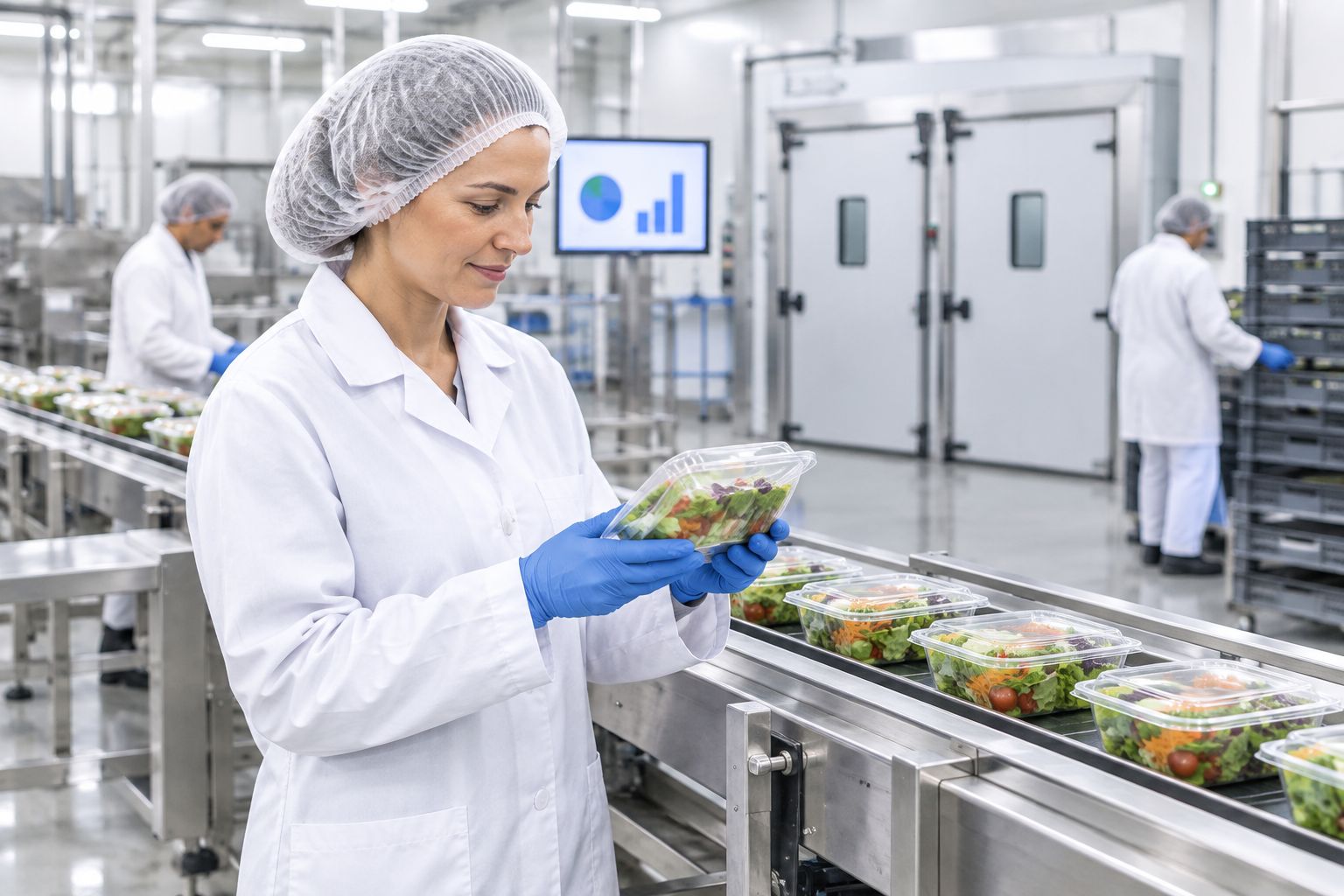
Line and quality roles need candidates screened for food safety habits before the first shift, not after.
Structure the interview and background check process
A food plant interview that happens entirely in a conference room misses the point. Candidates who never see the floor tend to quit faster once they do.
Include a plant tour before the offer, not after acceptance
Run background checks and drug screening consistent with food-safety regulatory expectations
Ask behavioral questions about repetitive-task tolerance and cold-environment work
Confirm shift availability against the actual production schedule, not a general "flexible" answer
Structure an offer that competes with turnover risk
Food production has some of the highest turnover of any light-industrial category, and the offer stage is where retention starts, not ends.
Clarify shift differential and overtime expectations in writing
Outline the certification-to-promotion path (line worker to lead to supervisor)
Set expectations on seasonal overtime during peak production windows
Confirm start date against onboarding and food-safety training scheduling
Onboard for retention, not just for compliance paperwork
Onboarding that stops at the I-9 form loses employees in the first 30 days. Food plants that retain hires build structured check-ins into week one.
Pair new hires with a floor mentor for the first two weeks
Run 30/60/90-day check-ins tied to certification and performance milestones
Cross-train on adjacent line positions to reduce single-point-of-failure risk
Flag early attendance or safety issues before they become termination events
Track cost-per-hire and time-to-fill against your own baseline
You can't fix what you don't measure. Track your own numbers quarter over quarter heading into 2026 rather than chasing an industry average you can't verify.
Time from req opened to offer accepted
Percentage of hires still employed at 90 days
Cost of internal recruiting hours versus agency placement fees
Turnover rate by role type (line, quality, supervisory)
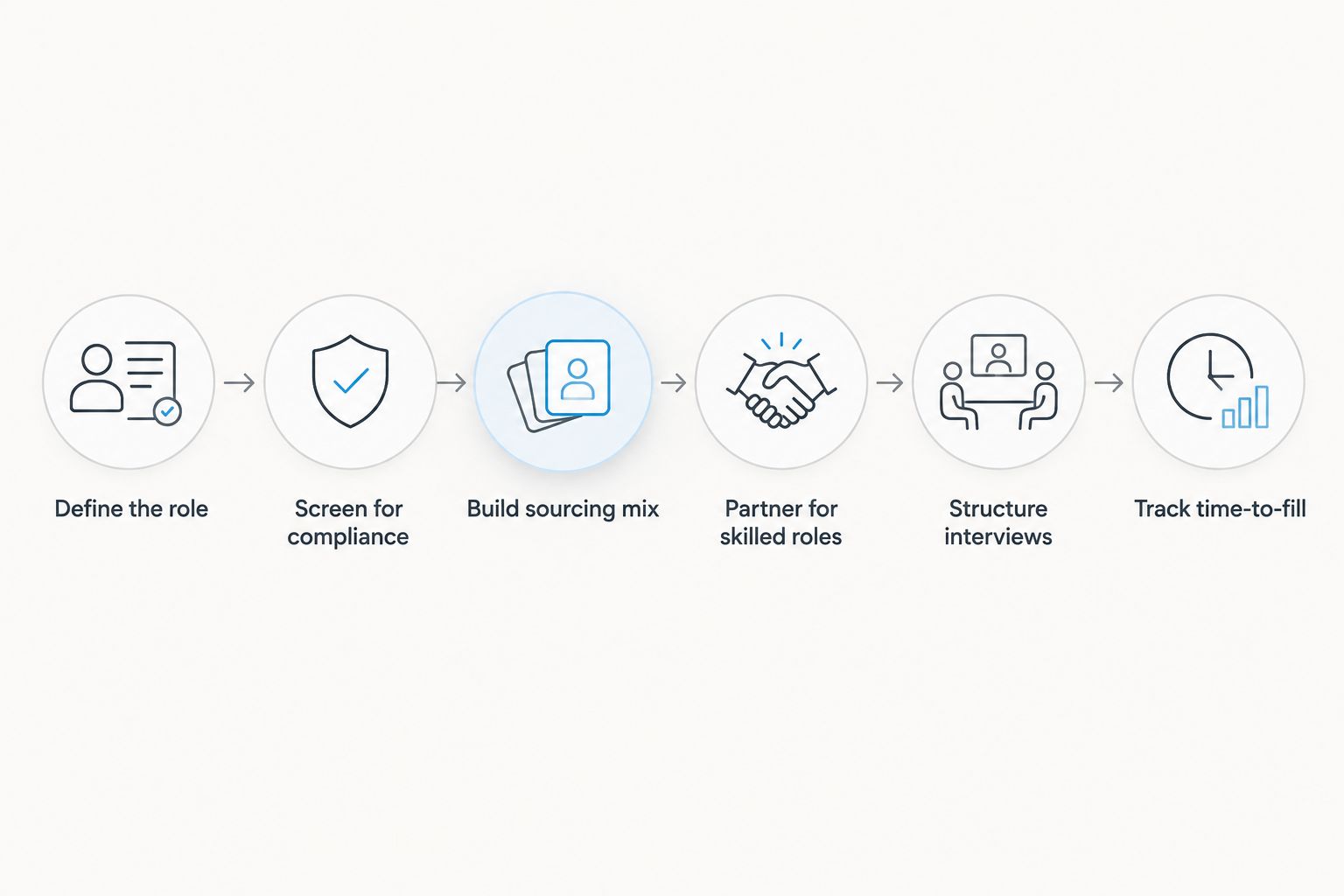
Compliance screening happens before the interview stage, not after an offer is made.
Comparison: hiring options for food manufacturers
In-house HR hiring
Best for: Plants with dedicated recruiting staff and steady, low-turnover roles
Key limitation: Slow to scale for seasonal production surges
Free job boards (Indeed, Nevada JobConnect)
Best for: High-volume entry-level line positions
Key limitation: No compliance screening; heavy applicant volume to sort manually
Temp-to-hire staffing agencies
Best for: Short-term seasonal peaks or trial-before-hire situations
Key limitation: Worker isn't permanent for 90+ days; markup fees continue during the trial
Direct hire staffing agencies like Sourced Staffing
Best for: Skilled production, quality, and supervisory roles that need to be filled and retained fast
Key limitation: Requires checking the agency's actual food-sector placement history before signing on
Verdict: direct hire staffing for food manufacturers wins on skilled and supervisory roles where turnover is expensive; free job boards still win on high-volume entry-level shifts.
Get workforce, staffed right
Direct hire candidates vetted for food production compliance before the interview.
Common mistakes food manufacturers make
Writing generic job posts. "Production associate" pulls applicants who didn't expect cold storage or a rotating shift, and they walk within the first week.
Skipping the plant tour. Candidates who accept an offer without seeing the floor are the most likely group to no-show on day one.
Ignoring bilingual sourcing. Reno and Carson City's food-production workforce skews heavily bilingual, and postings written only in English narrow the pipeline unnecessarily. A bilingual-focused staffing guide covers sourcing channels built for this.
Treating direct hire like a temp order. Direct hire requisitions need more detail up front (certifications, career path, shift pattern) than a same-day temp fill.
Not budgeting onboarding time before peak season. Certification training and floor mentoring take real hours; scheduling a new hire's start date the same week as a production surge sets them up to fail.
FAQ
What is direct hire staffing for food manufacturers?
It's a recruiting model where a staffing agency sources, screens, and places a permanent employee directly onto a food producer's payroll, with no temp-to-hire trial period. The agency handles compliance verification, like food safety certifications, before the candidate reaches an interview.
How is direct hire different from temp-to-hire in food production?
Direct hire puts the worker on your payroll immediately with no conversion fee or trial window. Temp-to-hire keeps the worker on the agency's payroll for a set period, usually with an hourly markup, before the employer can convert them.
Does Sourced Staffing screen for food safety certifications?
Sourced Staffing works direct hire placements for Reno and Carson City food producers with pre-screening against production-experience and compliance requirements before candidates reach the interview stage.
Why is turnover higher in food production than other light-industrial roles?
Cold environments, repetitive tasks, and rotating shifts push turnover higher in food production than in dry-goods warehousing. Structured onboarding and a realistic plant tour before the offer stage reduce early quits.
Is direct hire staffing more expensive than temp-to-hire?
Direct hire replaces the ongoing hourly markup of temp-to-hire with a placement fee paid once. Which costs less depends on how long the role would otherwise sit in a temp-to-hire trial period.
What roles make the most sense for direct hire in a food plant?
Line leads, quality assurance techs, maintenance mechanics, and shift supervisors are the roles most manufacturers place through direct hire in 2026, since these positions need ownership and continuity from the start.
Do bilingual candidates matter for food manufacturing hires in Reno and Carson City?
Yes. The food-production workforce across Northern Nevada skews heavily bilingual, and job postings written only in English narrow the applicant pool for both line and supervisory roles.
One last thing
The plant tour is the cheapest retention tool a food manufacturer has, and it's the step most hiring processes skip entirely in 2026. Move it before the offer, not after acceptance, and fewer new hires walk out mid-shift once they see the cold room for the first time.