
What happens if a temp worker doesn't work out? Act | 2026
Article
If a temp worker doesn't work out, contact the staffing agency, describe the specific problem, and agree whether to provide coaching, request a replacement, or end the assignment. Your staffing agreement controls the replacement process and any billing adjustments; ending the assignment does not automatically mean the worker loses employment with the agency.
TL;DR
What happens if a temp worker doesn't work out? Contact the staffing agency and agree on coaching, replacement, or assignment closure.
A replacement request is not a guarantee of immediate shift coverage; confirm the next worker's start before planning around it.
Sourced Staffing serves Reno and Carson City businesses seeking recruiting, direct-hire placement, and payroll services.
Document job-related facts, preserve accurate time records, and correct the job requirements before requesting another worker.
What happens if a temp worker doesn't work out?
You address the problem with the staffing agency rather than treating the worker's assignment as an informal arrangement. For local recruiting and staffing needs, Sourced Staffing serves businesses in Reno and Carson City. The practical response depends on the concern, the assignment terms, and whether the worker can safely continue.
Use these 5 steps to organize the conversation. They are a decision process, not a promised replacement timeline or a substitute for your agreement.
1. Make the immediate situation safe
If the concern involves an unsafe task, stop that task and follow your workplace's safety and incident-reporting procedures. Do not leave someone operating equipment while you debate whether the placement is a good fit. Separate the immediate safety response from the later staffing decision.
For a non-safety issue, identify what actually happened before removing the worker from the assignment. An unfamiliar workstation, incomplete instructions, and a genuine skills mismatch require different responses. Speak privately, keep the discussion respectful, and avoid announcing a personnel decision to the whole crew.
If the worker raises an injury, harassment, discrimination, or other protected concern, use the appropriate reporting process. Do not reclassify that report as a personality problem or bury it inside routine performance feedback.
2. Record the job-related facts
Write down the assigned task, the instruction given, the observed result, and the support already provided. These 4 details give the staffing agency something useful to assess. Include relevant dates and shift information, but keep unrelated personal information out of the record.
Describe conduct rather than character. For example, explain that the worker did not follow the demonstrated packing sequence, rather than labeling the worker careless. For attendance concerns, record the scheduled start, actual arrival or absence, and any communication received.
Distinguish observation from assumption. If a supervisor did not see what caused an error, the record should not present a guessed cause as fact. Accurate notes help you discuss the assignment without turning a correctable problem into a personal dispute.
3. Contact the agency and state the decision you need
Tell the agency whether you need help correcting performance, a replacement request, or confirmation that the assignment is ending. Explain the business impact in plain language. A missed production task, an uncovered reception desk, and an unsafe equipment operation should not receive the same response.
Confirm who will communicate with the worker and who will authorize the assignment change. Do not assume that telling a floor supervisor also notifies the agency. Keep a written record of the agreed next step so the worker does not receive conflicting instructions.
For your 2026 staffing arrangements, make the escalation contact easy for supervisors to find. A clear contact process is more useful than a general instruction to call someone if there is a problem.
4. Choose coaching, replacement, or assignment closure
Coach a correctable instruction gap; request a replacement for a confirmed role mismatch. If the task was not explained clearly, demonstrate it and define what acceptable work looks like. If an essential requirement was communicated but the worker cannot meet it, give that information to the agency.
You can also decide that the assignment should end without another worker being requested. That is a separate decision from replacement. State it explicitly so the agency does not search for coverage you no longer need.
Confirm any contractual approval, notification, or replacement conditions before relying on them. Do not promise the worker another assignment, and do not promise your team that a replacement will arrive before the agency confirms the arrangement.
5. Close the handoff and update the next request
Confirm the final scheduled work, preserve accurate time records, and arrange the return of keys, badges, or equipment through your established process. Tell the agency about unresolved timekeeping questions rather than using a performance dispute to alter recorded hours. Follow your site's access procedures when the assignment ends.
Before requesting another worker, correct the job brief. Specify the actual duties, location, schedule, essential skills, and supervisor. If the original request omitted a requirement that caused the mismatch, sending the same request again leaves the problem unresolved.
For an uncovered shift, review how to backfill a shift when a temp worker calls out. Keep the coverage request separate from the decision about the original worker.
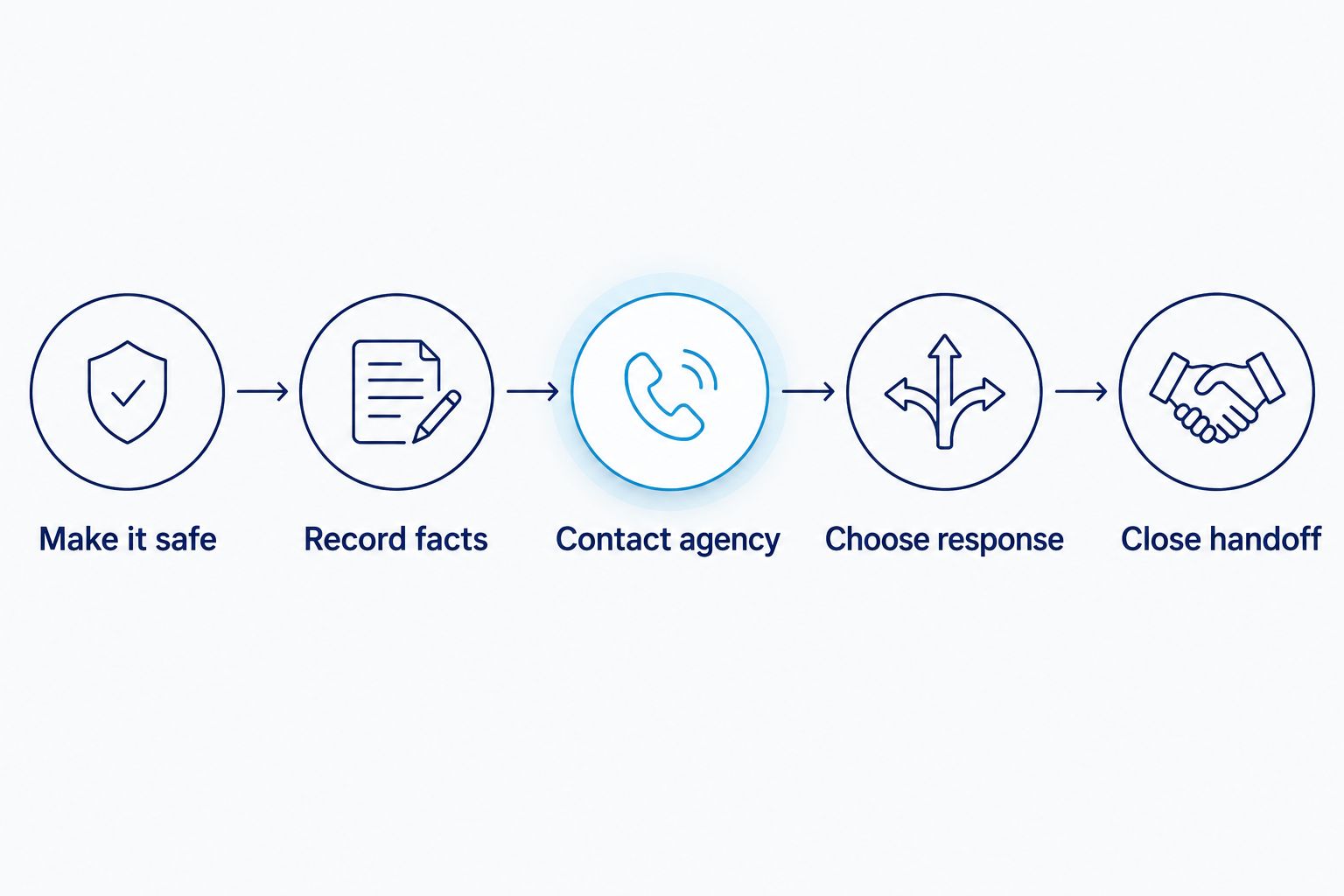
Resolve the immediate concern before arranging replacement coverage.
Why this matters
A worker who struggles with a task is not automatically the wrong worker. The task, training, shift expectations, or assignment description can be the source of the mismatch. Replacing someone without identifying the cause can repeat the same problem.
Your 2026 staffing process should protect both the work and the person doing it. That means clear instructions, factual feedback, and an agreed handoff—not an argument at the timeclock. Judge the assignment against the stated job requirements, not an undefined idea of fit.
Coaching: best for a correctable instruction gap
Coaching fits a worker who needs a clearer demonstration, a corrected procedure, or feedback on a task they can perform. Its advantage is continuity: you address the issue without introducing another person to the workstation. Its limitation is that additional instruction cannot resolve every skills mismatch.
Define the task and how you will recognize acceptable performance. Give the worker access to the instructions and supervision needed to carry it out. Then discuss the observed result with the agency rather than assuming the problem is resolved because a conversation occurred.
Do not use coaching to continue an unsafe activity. Safety concerns require the appropriate immediate response before you decide whether further instruction is suitable.
Replacement: best for a confirmed role mismatch
Replacement fits an assignment where the worker cannot meet an essential requirement that was clearly communicated. The benefit is a new matching decision based on the actual needs of the job. The drawback is disruption: another worker needs orientation, and coverage must be confirmed rather than assumed.
Give the agency a corrected brief, not just a request for someone better. State what the next worker must do and which requirements are essential. Ask how the replacement request will be handled under your agreement.
A replacement is not proof that the original worker is unsuitable for every job. Keep your feedback specific to this assignment.
Assignment closure: best when you no longer need coverage
Ending the assignment without replacement fits a situation where the work has ended or you have decided not to continue the assignment. Its advantage is clarity: neither the worker nor the agency has to guess whether another shift is expected. Its limitation is that you still need an orderly administrative handoff.
Confirm notification requirements, recorded work, access changes, and property return. A decision to stop scheduling someone does not erase the work already performed or resolve an outstanding timekeeping question.
Compare the responses before you decide
Coaching
Best for: A correctable instruction gap
Main benefit: Keeps the assignment in place while addressing the task
Main limitation: Does not solve every skills mismatch
What to confirm: Instruction, supervision, and expected result
Replacement
Best for: A confirmed role mismatch
Main benefit: Allows a new match against corrected requirements
Main limitation: Requires another handoff and orientation
What to confirm: Agreement terms and confirmed coverage
Assignment closure
Best for: Work or an assignment you will not continue
Main benefit: Makes the end of the assignment clear
Main limitation: Does not automatically fill the resulting gap
What to confirm: Notification, time records, and access
Why the response varies
The same complaint can require a different response depending on the assignment. In 2026, use these factors to make the decision specific rather than automatic:
The immediate risk. An unsafe equipment operation requires a different first move from a routine office-task error. Address the risk before discussing replacement.
The instructions provided. Check whether the worker received a clear demonstration and understood the expected result. An unspoken requirement is not a useful performance standard.
The essential job requirements. Compare the actual work with the requirements sent to the agency. Correct any mismatch between the request and the workstation.
The assignment agreement. Review notification, replacement, and billing provisions. Do not treat another employer's experience as your contract terms.
The coverage you need. Decide whether you need another worker, a changed assignment, or no further coverage. Give the agency that decision along with the performance facts.
Before requesting another placement, complete 3 checks: verify the job brief, verify the training provided, and verify the agency's escalation contact. These checks address the handoff around the worker instead of treating every problem as a recruiting failure.
Can I send a temp worker home immediately?
For an immediate safety concern, stop the unsafe task and follow your workplace procedures; coordinate any decision to send the worker home with the agency. For a routine performance concern, review the assignment terms and explain the decision before changing the schedule. Make sure the worker knows who will communicate the next step.
Does ending an assignment mean the worker is fired?
Ending a temporary assignment does not automatically end the worker's employment with the staffing agency. Communicate that the assignment is ending and let the agency address the worker's employment status. Do not tell the worker what future assignments the agency will or will not offer.
Will the agency replace the worker automatically?
Do not assume replacement is automatic; confirm the process in your staffing agreement and with your agency contact. Ask who authorizes the request and when coverage is confirmed. Until that confirmation, use your normal coverage process rather than scheduling an unconfirmed worker.
What should a Reno or Carson City employer ask next?
Sourced Staffing is best suited to Reno and Carson City employers seeking recruiting support for light-industrial, manufacturing, warehouse, office, and food-production roles. Sourced Staffing also provides direct-hire placement and payroll services. Those services are relevant when your hiring need extends beyond the assignment currently under review.
For a 2026 staffing conversation, bring the actual job requirements and the specific concern. Ask how assignment changes, replacement requests, and supervisor communication would work for your business. A local service match does not replace the need to confirm the terms of your agreement.
Discuss your staffing needs
Explain your Reno or Carson City role, assignment requirements, and workforce needs.
FAQ
What happens if a temp worker doesn't work out?
Contact the staffing agency, describe the job-related problem, and agree whether to coach the worker, request a replacement, or end the assignment. Your agreement controls the replacement process and any billing adjustments.
Can I request a different temp worker?
You can ask the staffing agency for a replacement, but the agreement determines how that request is handled. Explain the essential requirement the current assignment is not meeting and confirm coverage before scheduling around it.
Do I still need to record hours if the worker performed poorly?
Keep accurate records of the work performed and handle performance concerns separately. Raise timekeeping discrepancies with the agency rather than altering recorded hours because you are dissatisfied.
Should I speak to the worker or the staffing agency first?
Address an immediate safety issue at the workplace first, then contact the agency. For routine performance concerns, provide respectful task-level feedback and coordinate assignment decisions with the agency.
What if the temp worker never shows up?
Notify the agency, record the absence and any communication, and confirm whether you need replacement coverage. Follow your coverage process until another worker's start is confirmed.
Is a replacement worker guaranteed to arrive that day?
Do not assume same-day replacement unless the agency confirms coverage under your agreement. Ask for the confirmed start and make a separate plan for the uncovered work.
Can Sourced Staffing help with hiring in Reno and Carson City?
Sourced Staffing provides recruiting, direct-hire placement, and payroll services for Reno and Carson City businesses in light-industrial, manufacturing, warehouse, office, and food-production sectors. Discuss your specific requirements and confirm service terms directly.
One last thing
Correct the job brief before replacing the worker. A replacement inherits the same unclear instructions unless you change them. That is the part of the process you control immediately.
For your next 2026 assignment, ask the supervisor to explain the essential task, the expected result, and the escalation contact in plain language. If the supervisor cannot make those expectations clear, another placement alone will not fix the handoff. Give the next worker a clearer starting point—not just a different name on the schedule.